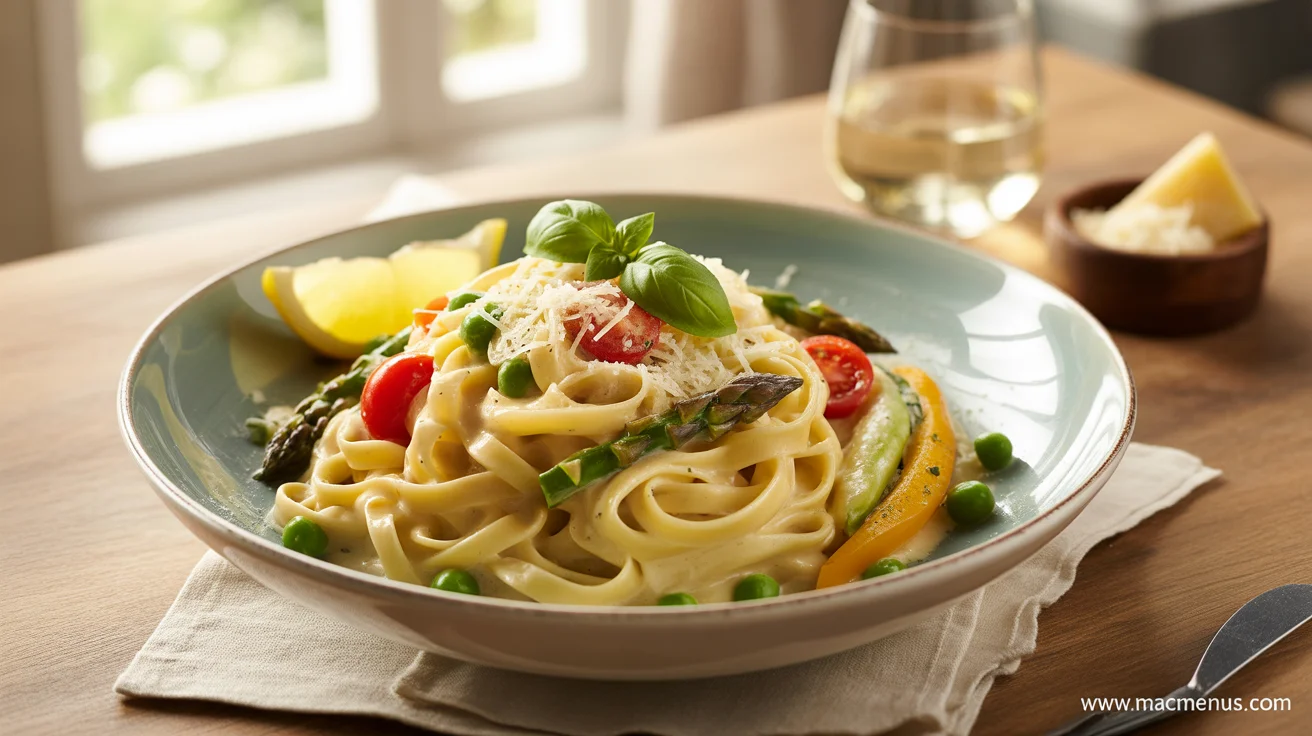
Certain recipes look like they belong on a restaurant menu but come together so easily at home that you almost feel like you’ve gotten away with something. This pasta primavera is exactly that kind of recipe.
A tangle of perfectly cooked pasta coated in a silky, light cream sauce. Sweet cherry tomatoes and tender-crisp zucchini. Vibrant bell peppers, bright green peas, and asparagus that still has a little bite. A shower of fresh parmesan and a few torn basil leaves over the top.
Creamy Pasta primavera, which translates literally to “spring pasta” in Italian, has always been a celebration of fresh, seasonal vegetables cooked quickly and tossed with a light sauce that lets each ingredient shine.
It’s the kind of dish that feels vibrant and alive on the plate, and it comes together in under 30 minutes with one pan and one pot. For a weeknight vegetarian dinner that feels genuinely special, nothing beats it.
Ingredients for Creamy Pasta Primavera
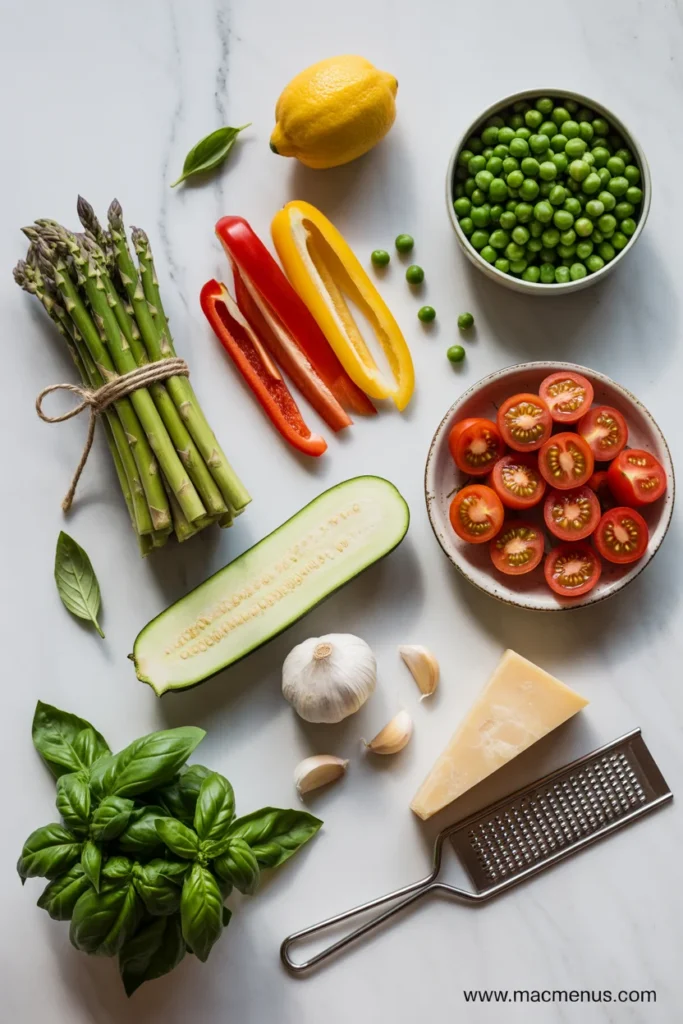
This creamy vegetable pasta uses fresh, seasonal ingredients and a handful of pantry staples. Here’s everything you need:
The pasta:
- 12 oz fettuccine, linguine, or penne
- 1 tablespoon salt (for the pasta water)
The vegetables:
- 1 cup asparagus, woody ends snapped off, cut into 2-inch pieces
- 1 medium zucchini, halved lengthwise and sliced into half-moons
- 1 cup cherry tomatoes, halved
- 1 red bell pepper, thinly sliced
- 1 yellow bell pepper, thinly sliced
- ¾ cup frozen peas, thawed
- 2 tablespoons olive oil
- Salt and black pepper to taste
The creamy parmesan sauce:
- 2 tablespoons butter
- 4 cloves garlic, minced
- ¼ cup dry white wine (or extra pasta water)
- ¾ cup heavy cream
- ½ cup freshly grated Parmesan cheese, plus more for serving
- ½ cup reserved pasta water
- Zest of 1 lemon
- 1 tablespoon fresh lemon juice
- ¼ teaspoon red pepper flakes
- Salt and black pepper to taste
To finish:
- Fresh basil leaves, torn
- Extra parmesan for serving
- A drizzle of good-quality olive oil
- Freshly cracked black pepper
How to Make Creamy Pasta Primavera
This easy pasta primavera comes together in four simple stages. Here’s exactly how to do it:
Step 1: Cook the Pasta
Bring a large pot of water to a rolling boil. Add a generous tablespoon of salt, and the water should taste like mild seawater. Cook the pasta according to package directions until just al dente, tender but with a slight bite remaining. It will finish cooking in the sauce, so pull it slightly before it’s fully done.
Before draining, scoop out at least ¾ cup of the starchy pasta water and set it aside. This is important, don’t forget this step, or you’ll be running the tap hoping regular water does the same job. It doesn’t.
Drain the pasta and set aside.
Step 2: Sauté the Vegetables
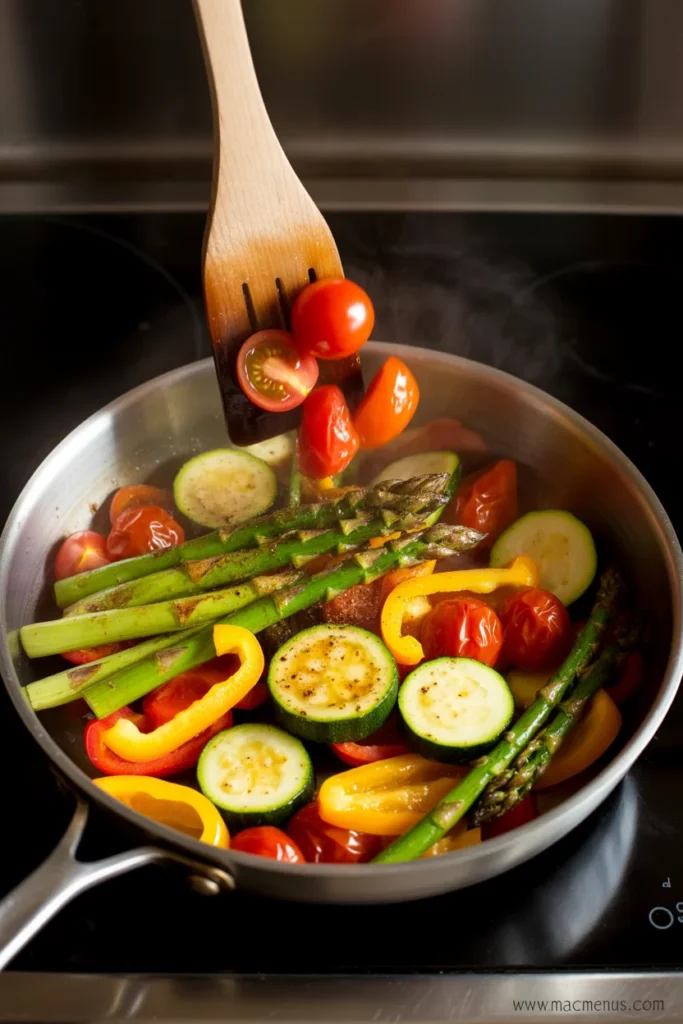
While the pasta cooks, heat 2 tablespoons of olive oil in a large, wide skillet over medium-high heat. When the oil shimmers, add the asparagus and sliced bell peppers. Cook for 3 to 4 minutes, stirring occasionally, until they begin to soften and develop a little color at the edges.
Add the zucchini and cherry tomatoes. Season generously with salt and black pepper. Cook for another 2 to 3 minutes until the tomatoes begin to burst and release their juices, and the zucchini is golden at the edges but still holds its shape.
Add the thawed peas and toss everything together for 30 seconds. Remove the vegetables from the skillet and set aside on a plate. Don’t cover them; you want them to stay slightly crisp, not steam under a lid and lose their color.
Step 3: Build the Cream Sauce
In the same skillet, reduce the heat to medium and add the butter. Once it melts and starts to foam, add the minced garlic and red pepper flakes. Cook for 60 to 90 seconds, stirring constantly, until the garlic is fragrant and just beginning to turn golden. Don’t let it burn; burnt garlic will make the entire sauce bitter.
Pour in the white wine and let it bubble and reduce for about 2 minutes, scraping up any browned bits from the bottom of the pan. Those little bits from the vegetable sauté are pure concentrated flavor, and the wine lifts them right into the sauce.
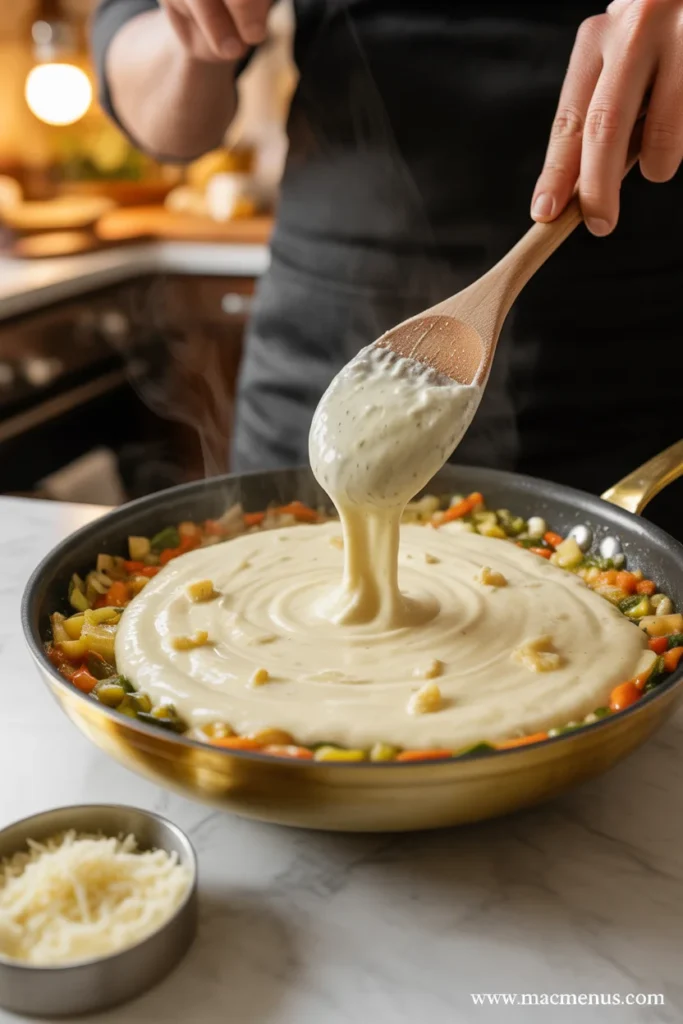
Pour in the heavy cream. Stir to combine and let the cream come to a gentle simmer. Cook for 2 to 3 minutes, stirring frequently, until the cream has reduced slightly and the sauce begins to coat the back of a spoon.
Add the freshly grated parmesan and stir until it’s fully melted into the sauce and the whole thing is smooth, glossy, and beautiful. Add ¼ cup of the reserved pasta water and stir; the sauce will loosen slightly and take on a silky, flowing consistency that clings perfectly to pasta.
Add the lemon zest and lemon juice. Season with salt and black pepper. Taste and adjust; it should be rich, bright, and just a little tangy.
Step 4: Bring Everything Together
Add the drained pasta directly to the cream sauce in the skillet. Toss well using tongs to coat every strand in the sauce. If the sauce feels too thick, add another splash of the reserved pasta water and toss again until the consistency is perfect, silky, glossy, and cling-worthy.
Add the sautéed vegetables back to the skillet. Toss everything together gently; you want the vegetables distributed through the pasta without breaking them apart. Let it all sit together over low heat for 60 seconds so the flavors can come together.
Remove from heat. Scatter torn fresh basil leaves over the top, add a final shower of freshly grated parmesan, and finish with a drizzle of good olive oil and a generous crack of black pepper.
Serve immediately, pasta primavera waits for no one.
Tips for the Best Pasta Primavera Every Time
These small details make a noticeable difference in the final dish:
Salt your pasta water generously. Under-salted pasta is the most common reason a pasta dish tastes flat. The pasta itself should be well-seasoned before the sauce even gets involved.
Cook the pasta just shy of al dente. It finishes cooking in the sauce, and those last 60 seconds in the hot cream sauce with a splash of pasta water take it exactly to the perfect texture. Fully cooked pasta going into the sauce will become slightly mushy.
Get the skillet hot before adding the vegetables. A hot pan over medium-high heat is what gives the vegetables those slightly charred, caramelized edges. A cold or lukewarm pan just steams them into softness without any of the color or depth that makes sautéed vegetables taste so good.
Don’t overcook the vegetables. They should be tender-crisp, cooked through but still holding their shape and color. Overcooked vegetables turn dull, soft, and sad in a pasta primavera. Watch them closely and pull them from the heat a little earlier than you think you need to.
Reserve more pasta water than you think you need. Cream sauces thicken as they sit and as they cool. Having a generous amount of reserved pasta water means you can always loosen the sauce to the perfect consistency right before serving.
Use a wide skillet, not a deep pot. The wide surface area of a large skillet is essential for properly sautéing the vegetables and building a sauce that reduces evenly. A deep, narrow pot traps steam and prevents the browning and reduction that make this dish great.
Variations and Seasonal Swaps
This spring pasta dish adapts beautifully through every season. Here’s how to make it your own:
Summer primavera. Swap asparagus for fresh corn cut from the cob, add halved yellow squash alongside the zucchini, and pile on extra cherry tomatoes at their peak sweetness. Add fresh, torn mint with the basil.
Fall primavera. Roast cubed butternut squash, halved Brussels sprouts, and sliced mushrooms on a sheet pan at 425°F until caramelized, then toss into the cream sauce with the pasta. Add a pinch of nutmeg to the cream sauce for warmth.
Winter primavera. Use roasted cauliflower, wilted baby kale, and sun-dried tomatoes. The sun-dried tomatoes add an intense, concentrated sweetness that brings the whole dish alive even when fresh summer produce isn’t available.
Add protein. Grilled chicken sliced over the top, sautéed shrimp tossed in with the vegetables, or crispy pancetta crisped in the skillet before building the sauce all work beautifully with this dish.
Make it lighter. Replace half the heavy cream with reserved pasta water and a little more parmesan. The starchy pasta water and melted cheese create a sauce that’s rich and creamy but considerably lighter than a full cream version.
Make it dairy-free. Use full-fat coconut cream instead of heavy cream and nutritional yeast instead of parmesan. Add an extra squeeze of lemon to compensate for the missing tang of the cheese. The result is different but still genuinely delicious.
Add sun-dried tomatoes. A small handful of oil-packed sun-dried tomatoes added to the sauce, along with the garlic, gives the dish an intense, jammy tomato depth that pairs beautifully with the fresh vegetables.
What to Serve with Creamy Pasta Primavera
This colorful vegetarian pasta dinner is satisfying enough on its own, but a few simple additions make it a full spread:
Garlic bread, the essential pasta companion. Thick slices of crusty bread rubbed with garlic and toasted in the oven until golden are made for dragging through leftover cream sauce.
Caesar salad, crisp romaine, shaved parmesan, and a tangy Caesar dressing provide the perfect contrast to the rich, creamy pasta.
Bruschetta, fresh tomato and basil bruschetta as a starter, sets up the fresh, Italian-inspired flavors of the main dish beautifully.
A simple arugula salad, peppery arugula dressed with just lemon juice and olive oil, is bright and fresh alongside the richness of the cream sauce.
Roasted garlic focaccia, tear-and-share focaccia at the center of the table, makes pasta primavera feel like a proper Italian dinner party.
A glass of white wine, Pinot Grigio, Sauvignon Blanc, or a light Chardonnay all pair beautifully with the cream sauce and fresh vegetables in this dish.
How to Store and Reheat
Refrigerator: Store leftover pasta primavera in an airtight container in the fridge for up to 3 days. The sauce will thicken significantly as it sits and absorbs into the pasta; this is normal.
Reheating: Add a splash of water, cream, or broth to the pasta before reheating. Warm gently in a skillet over medium-low heat, tossing frequently, until heated through, and the sauce has loosened back to a creamy consistency. Avoid the microwave if possible; it tends to make the vegetables soggy and can make the cream sauce separate.
Freezing: Cream-based pasta sauces do not freeze well; the cream separates, and the texture of the vegetables suffers significantly. This is best made fresh or stored in the refrigerator for a few days.
Refresh with fresh herbs. Before serving reheated leftovers, add a fresh handful of torn basil, a squeeze of lemon juice, and an extra shower of parmesan. It brings the dish back to life beautifully.
Conclusion
This pasta primavera recipe is the kind of dish that earns a permanent spot in your weeknight dinner rotation, not because it’s quick and easy, though it absolutely is both of those things, but because it’s genuinely, deeply good in a way that makes you look forward to making it again.
The silky cream sauce. The bright, tender-crisp vegetables. The perfectly cooked pasta that catches every drop of that glossy, parmesan-rich coating. The fresh basil and lemon that lift everything at the very end make the whole dish taste alive.
This is Italian-inspired cooking at its most joyful, with simple techniques, great ingredients, and a result that feels like so much more than the sum of its parts. Make it for a weeknight dinner. Make it for the company. Make it in spring when the asparagus and peas are at their peak sweetness, and then make it again in summer with tomatoes and corn fresh from the farmers’ market.