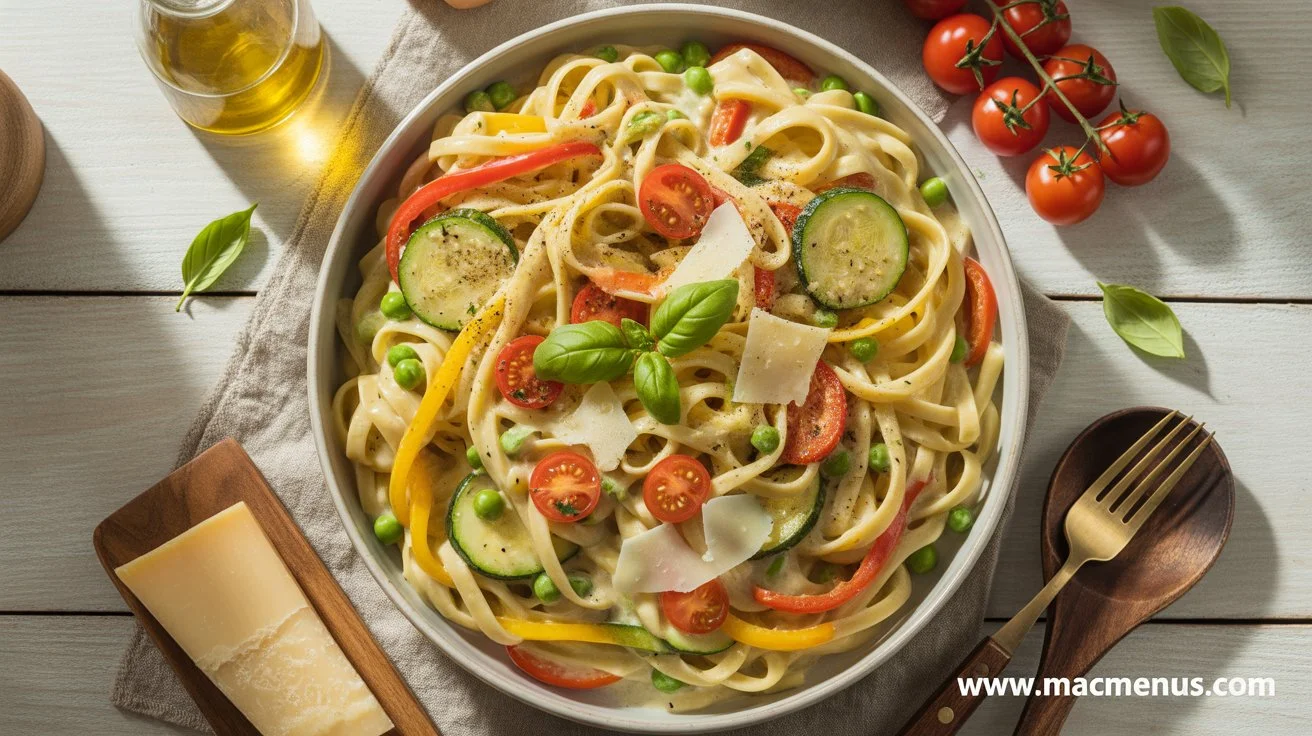
Easy Creamy Pasta Primavera With Garden-Fresh Vegetables
Some pasta dishes just feel like a warm hug and this pasta primavera recipe is exactly that. It is colorful, creamy, packed with garden-fresh vegetables, and comes together in about 35 minutes. That combination is hard to beat on a weeknight.
This dish has been a staple in kitchens for decades, and honestly, it deserves every bit of that love. The vibrant mix of zucchini, bell peppers, cherry tomatoes, and broccoli layered into a silky Parmesan cream sauce makes every single bite feel restaurant-quality. And the best part? You probably have most of these ingredients already.
What Is Pasta Primavera?
The word primavera means “spring” in Italian, and this dish lives up to its name. It is all about celebrating fresh, seasonal vegetables tossed with pasta and a light, savory sauce. While it sounds Italian, pasta primavera actually has roots in New York City, made famous by the legendary Le Cirque restaurant in the 1970s.
Today, the recipe has evolved into something deeply personal for home cooks. Every family makes it a little differently. This version leans into a creamy sauce that coats the pasta beautifully without feeling too heavy perfectly balanced and completely craveable.
Why You Will Love This Recipe
This creamy pasta primavera checks every box. It comes together fast, uses simple ingredients, works with whatever vegetables you have on hand, and tastes like something you would order at a sit-down Italian restaurant.
It is also naturally vegetarian, which makes it a great go-to for Meatless Monday or any night you want something satisfying without meat. The vegetables stay slightly crisp, the sauce is smooth and cheesy, and the pasta soaks up every drop of flavor. Once you make this, it will earn a permanent spot in your dinner rotation.
Ingredients You Will Need
Here is everything that goes into this fresh vegetable pasta. These measurements serve four people generously.
For the Pasta and Vegetables:
- 12 oz fettuccine or penne pasta
- 2 tablespoons olive oil
- 3 garlic cloves, minced
- 1 medium zucchini, sliced into half-moons
- 1 yellow bell pepper, sliced thin
- 1 red bell pepper, sliced thin
- 1 cup broccoli florets
- 1 cup cherry tomatoes, halved
- ½ cup frozen peas
- Salt and black pepper to taste
- 1 teaspoon Italian seasoning
- ½ teaspoon red pepper flakes (optional)
For the Creamy Sauce:
- 2 tablespoons unsalted butter
- 2 garlic cloves, minced
- 1 cup heavy cream
- ¾ cup freshly grated Parmesan cheese
- ¼ cup pasta water (reserved)
- Zest of half a lemon
- Salt and white pepper to taste
For Garnish:
- Fresh basil leaves
- Extra Parmesan for serving
- A drizzle of good olive oil
How to Make Pasta Primavera From Scratch
Step 1: Cook the Pasta
Bring a large pot of salted water to a rolling boil. Cook your pasta according to the package directions until just al dente, you want a slight bite left in it. Before draining, scoop out about ¼ cup of starchy pasta water and set it aside. That water is gold. It helps the cream sauce cling to every strand.
Step 2: Sauté the Fresh Vegetables
While the pasta cooks, heat olive oil in a large skillet over medium-high heat. Add the zucchini, bell peppers, and broccoli. Season with salt, black pepper, Italian seasoning, and red pepper flakes if you like a little kick. Cook for 4 to 5 minutes, stirring occasionally, until the vegetables are slightly golden on the edges but still hold their shape.
Add the cherry tomatoes and peas in the last 2 minutes. You just want the tomatoes to soften and start to blister. Stir in the garlic during the final minute so it blooms without burning. Remove the vegetables from the pan and set them aside.
Step 3: Build the Creamy Sauce
In the same skillet, reduce the heat to medium and melt the butter. Add the minced garlic and cook for about 1 minute until fragrant. Pour in the heavy cream and bring it to a gentle simmer. Let it cook for 2 to 3 minutes, stirring, until it starts to thicken slightly.
Stir in the freshly grated Parmesan cheese a little at a time, letting each addition melt fully before adding more. Add the lemon zest this brightens the whole sauce and keeps it from tasting too rich. Season with salt and white pepper. If the sauce feels too thick, stir in a splash of that reserved pasta water until you reach a creamy, pourable consistency.
Step 4: Toss Everything Together
Add the drained pasta directly into the sauce and toss well to coat. Fold in the sautéed vegetables gently. Everything should be coated in that glossy, creamy sauce. Taste and adjust salt, pepper, or lemon as needed.
Step 5: Plate and Serve
Serve immediately in warm pasta bowls. Top with a handful of fresh basil, an extra shower of Parmesan, and a light drizzle of olive oil. Eat while it is hot — this one does not wait.
Tips for the Best Creamy Pasta Primavera
Do not overcook the vegetables. The charm of this dish is the contrast between the tender pasta and the slightly crisp, colorful vegetables. Keep them vibrant and textured.
Use freshly grated Parmesan. Pre-shredded cheese from a bag contains anti-caking agents that prevent it from melting smoothly. A block of Parmesan and a box grater makes a real difference in the sauce.
Reserve your pasta water. Seriously, do not skip this step. The starchy water transforms a too-thick sauce into something silky and perfectly textured without diluting the flavor.
Season at every layer. Salt the pasta water well. Season the vegetables as they cook. Taste the sauce before tossing. Building flavor at each stage is what makes this dish taste complete.
Lemon zest is non-negotiable. It sounds small, but lemon zest lifts the entire cream sauce and balances the richness of the heavy cream and Parmesan. It is the secret detail that makes people ask for the recipe.
Vegetable Substitutions and Add-Ins
One of the best things about this spring pasta recipe is how flexible it is. Use what you have and what is in season.
Swap or add: asparagus, spinach, mushrooms, artichoke hearts, corn, sun-dried tomatoes, or English peas. All of them work beautifully in this dish.
Want to add protein? Grilled chicken, sautéed shrimp, or crispy pancetta all make great additions. Simply cook them separately and fold in at the end.
Going dairy-free? Use full-fat coconut cream and a dairy-free Parmesan alternative. The sauce will be slightly different but still wonderfully creamy.
What Pasta Shape Works Best?
Fettuccine is a classic choice here because the wide noodles hold the cream sauce incredibly well. Penne is another great option — the ridges trap the sauce inside every tube, which makes each bite extra satisfying.
Rigatoni, farfalle, and linguine all work too. Avoid very thin pastas like angel hair for this recipe, since the sauce and chunky vegetables need something sturdy to hold onto.
Make-Ahead and Storage Tips
Make-ahead: You can prep and sauté the vegetables up to a day in advance and store them in the refrigerator. Make the sauce fresh when you are ready to serve for the best texture.
Storage: Leftovers keep well in an airtight container in the refrigerator for up to 3 days. The pasta will absorb some of the sauce as it sits.
Reheating: Warm leftovers gently in a skillet over medium-low heat. Add a splash of cream or milk to loosen the sauce and stir until creamy again. Microwave works too just cover and heat in short bursts, stirring in between.
Freezing: This dish is not ideal for freezing because the cream sauce can separate when thawed. Best enjoyed fresh or within a few days.
What to Serve With Pasta Primavera
This creamy vegetable pasta is satisfying on its own, but here are a few easy pairings that round out the meal beautifully.
A crisp green salad with a lemon vinaigrette is a natural match, the acidity plays perfectly off the rich cream sauce. Warm garlic bread or a crusty baguette is always welcome at the table for mopping up the extra sauce. A glass of chilled Pinot Grigio or Sauvignon Blanc makes this dinner feel genuinely special without any extra effort.
Try our the best Irish Vegetarian Stew
A Dish Worth Coming Back To
This pasta primavera recipe with fresh vegetables and creamy sauce is the kind of dinner that feels indulgent without being complicated. It is bright, flavorful, and endlessly customizable. Whether you make it on a quiet Tuesday night or serve it at a dinner party, it always lands well.
Once you get the basic formula down fresh vegetables, a silky Parmesan cream sauce, perfectly cooked pasta, you will find yourself making it over and over again with whatever produce catches your eye at the market. That is the real beauty of this dish. It grows with the seasons and never gets old.